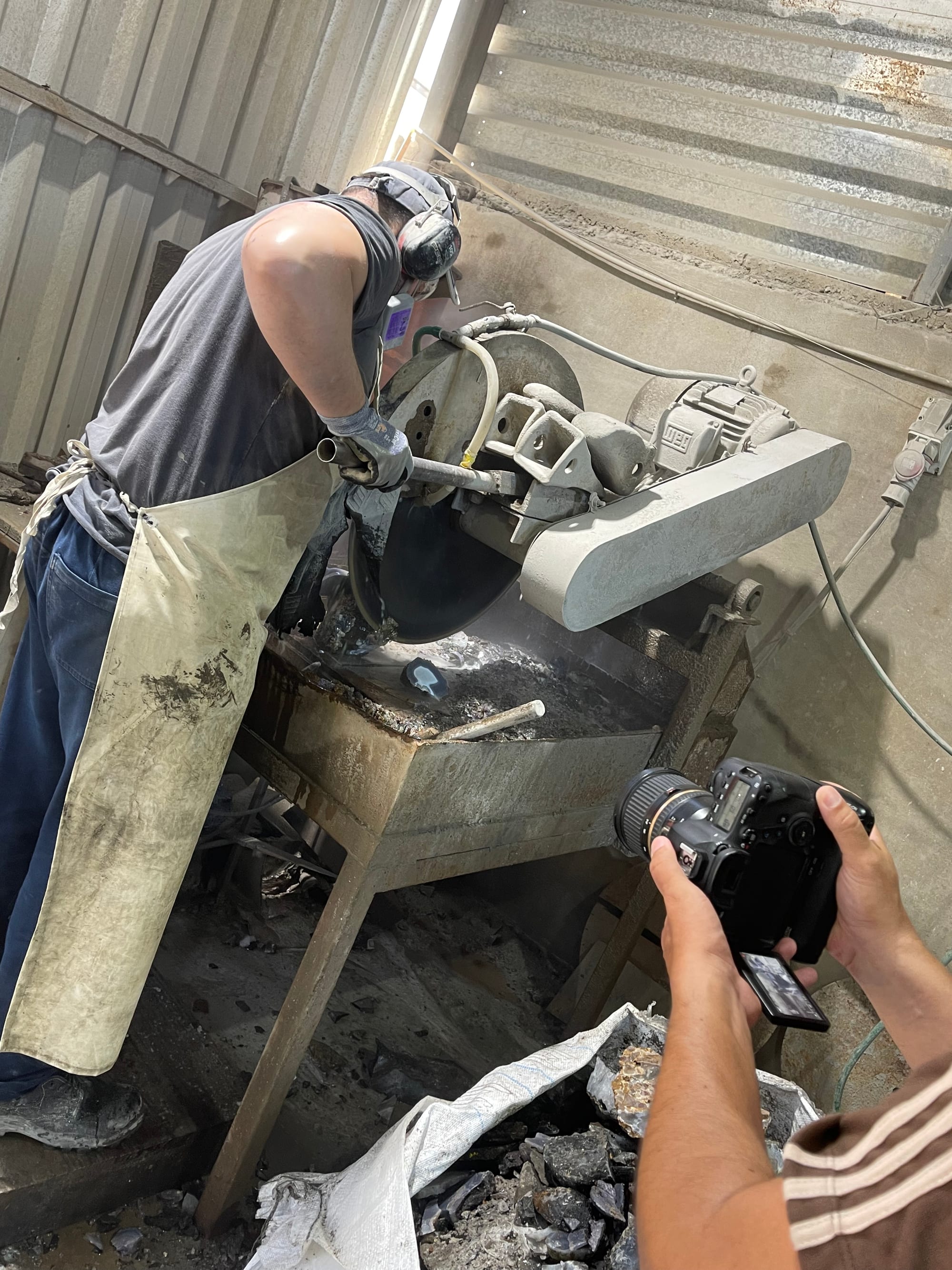
Specimen Design
First the stone. Then the decision.
How we decide what to show in a piece, and what to leave as it is.
The approach: six decisions
Read
What are we looking at? Color, crystal, architecture, associations, integrity. Before working on a piece, you have to understand it.
Preserve
What should we leave untouched? Some formations would lose what makes them exceptional if they were worked. The first decision may be not to intervene.
Orient
From what position is the piece best understood? A piece changes completely with its position. We look for the orientation that best reveals its structure.
Reveal
Is there something worth uncovering? In certain pieces, a precise cut can reveal an architecture, an agate or a formation that had remained hidden.
Polish
Which surface should be finished and which should stay natural? We polish where the work helps to understand and present the piece.
Present
How should it be oriented and presented? Proportion, orientation and base are part of the final presentation.
Carlos Sanchis leads Specimen Design at Le Stage Minerals together with his team. Each piece determines which specialists and artisans take part in the process.
The process
This is what the work looks like at Le Stage, stage by stage.
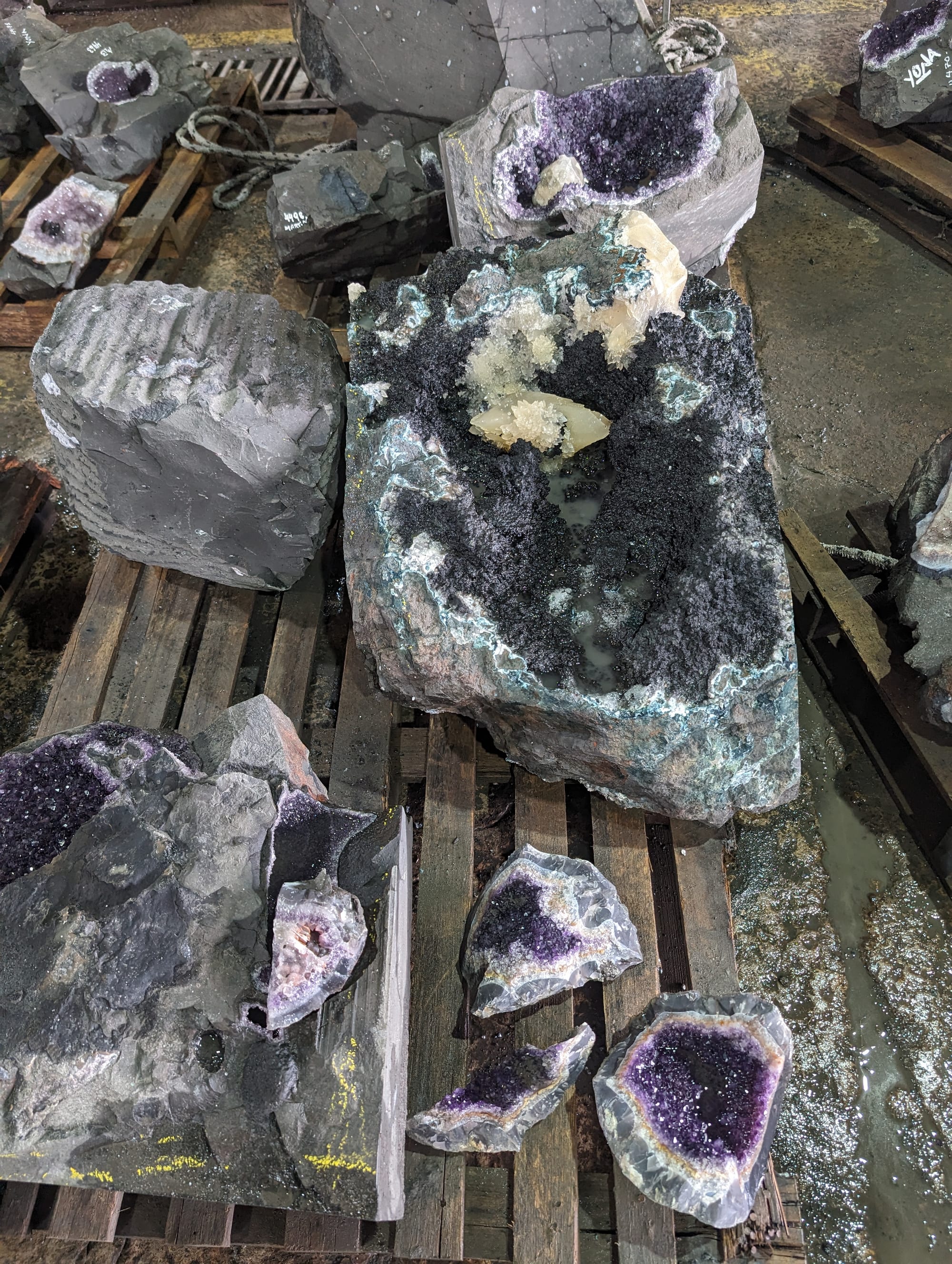
Stage 1 · Rough
Stones just in from the quarry, as they come out of the rock.
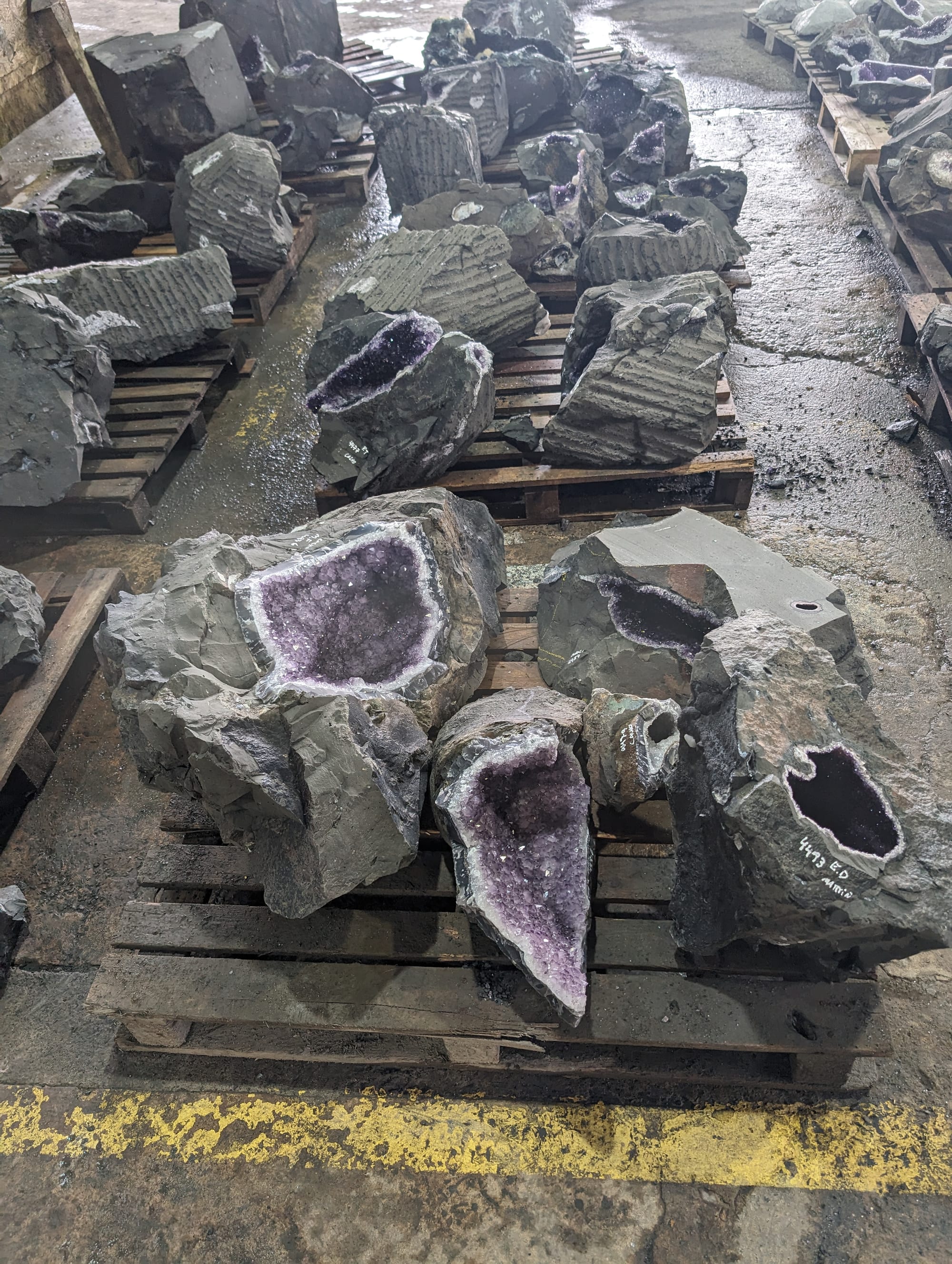
Stage 2 · Awaiting the decision
Before going further, we decide what to preserve and what to reveal.
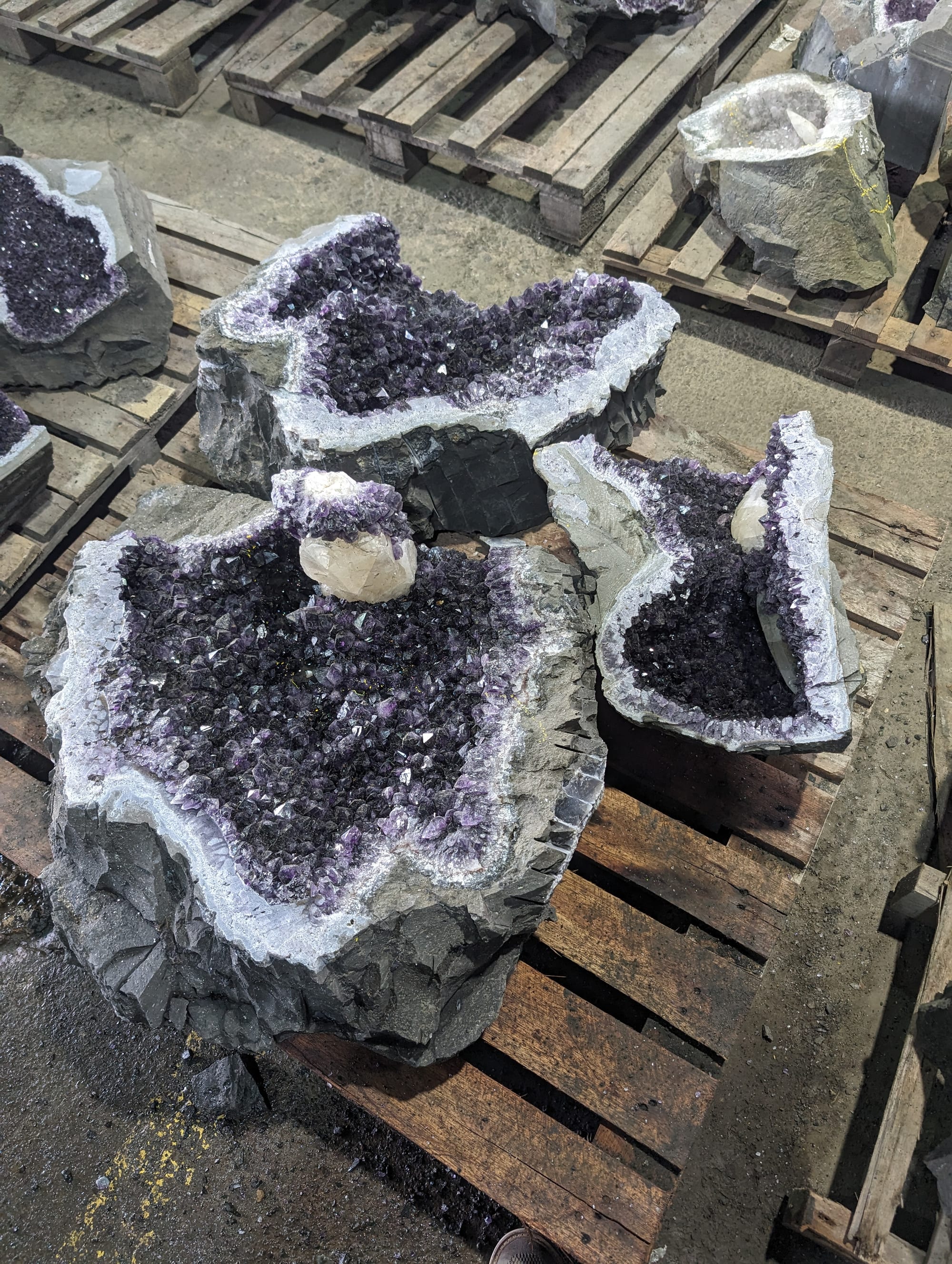
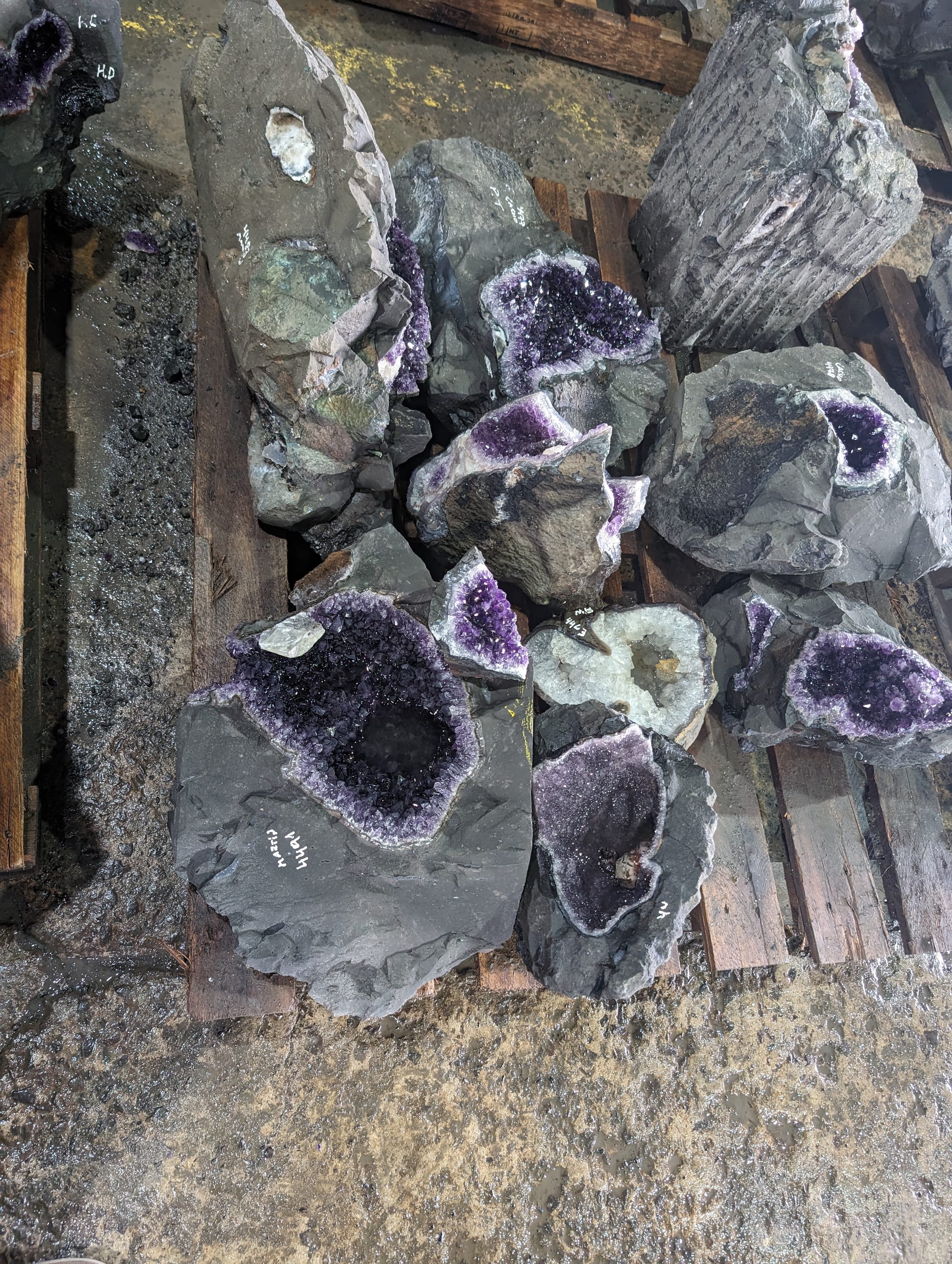
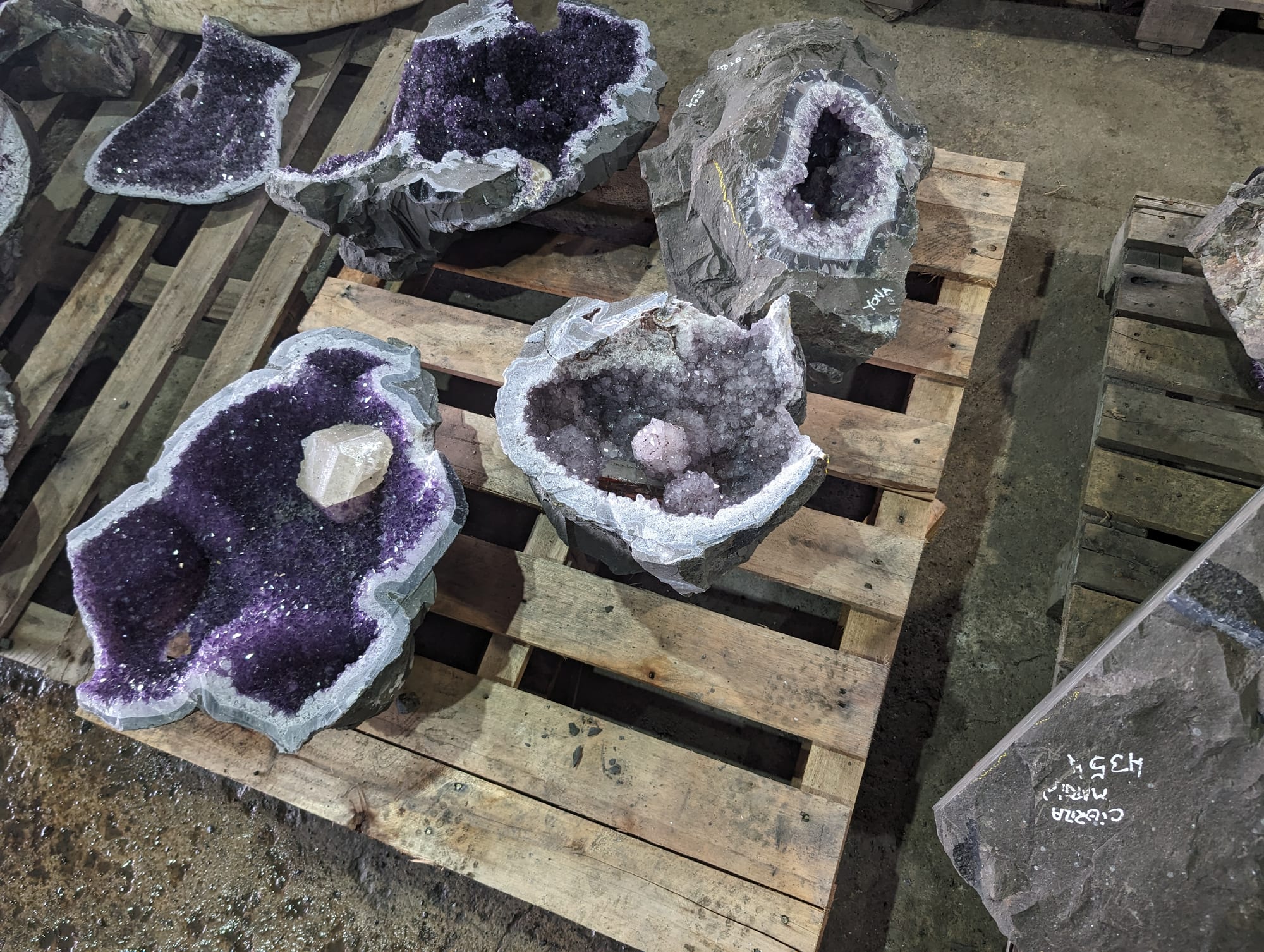
Stage 3 · The decision
Carlos Sanchis and his team, in front of the stone.
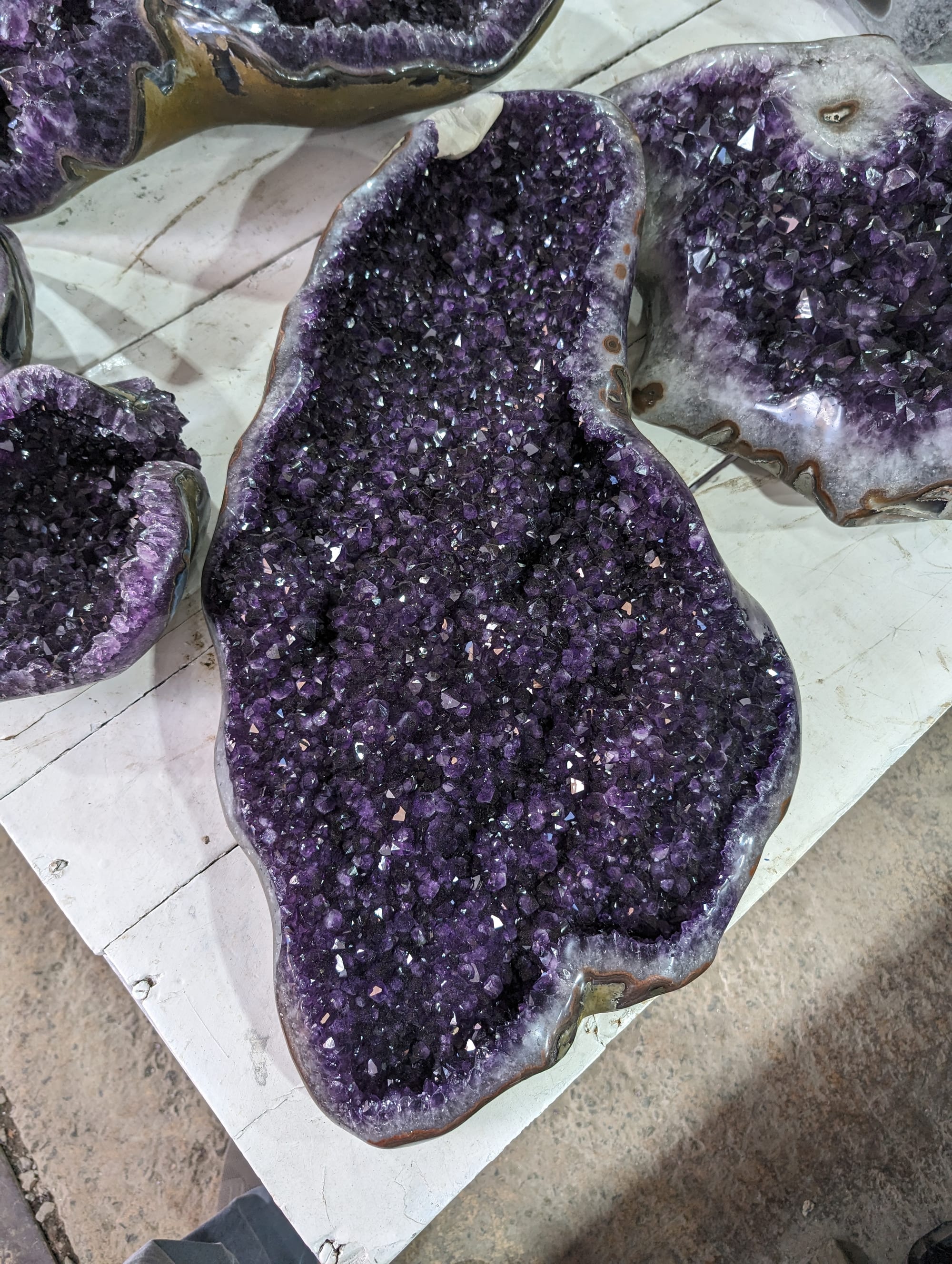
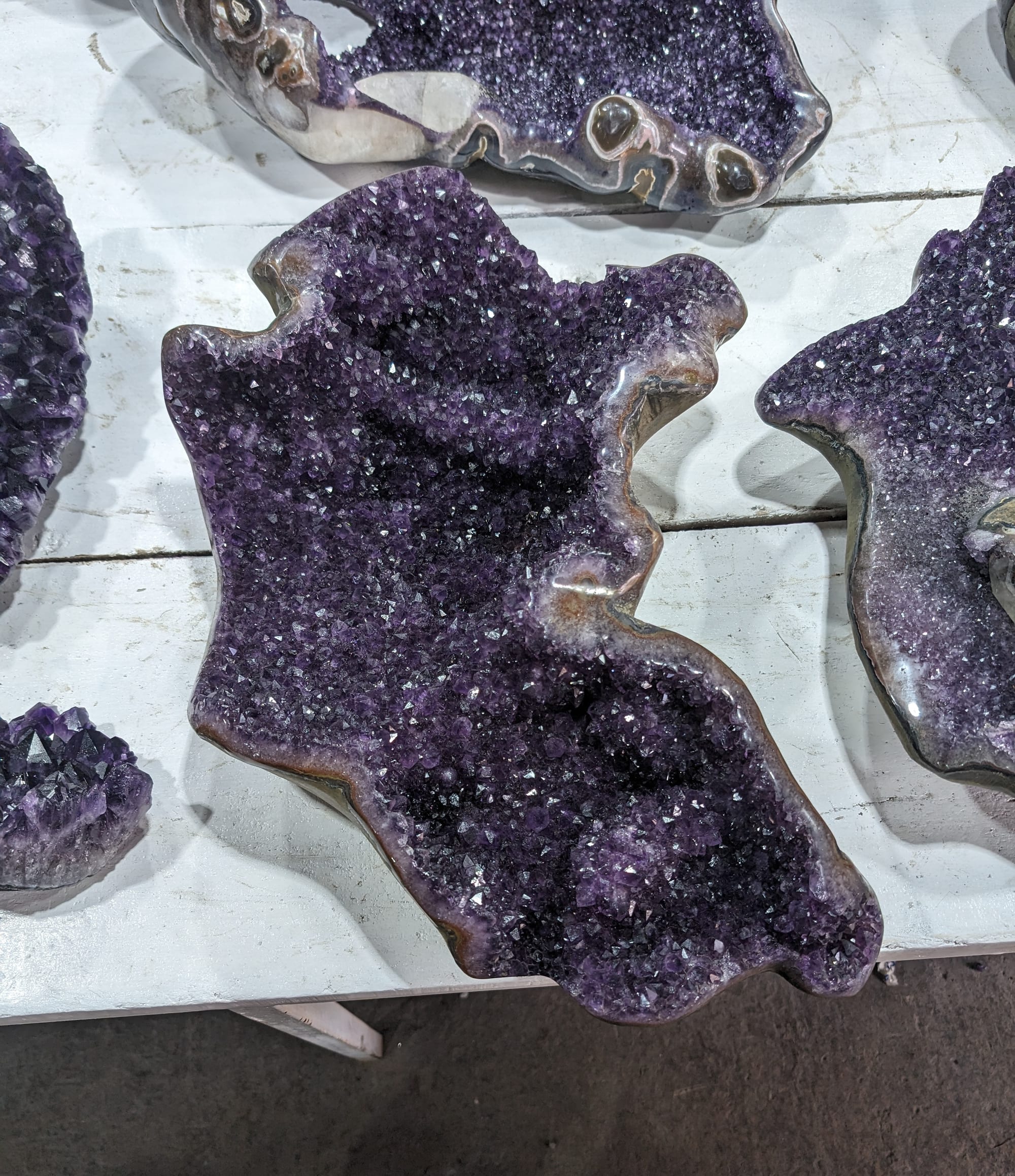
Stage 4 · Free form
Finished in free form.
Specimen Design with the collector
For selected pieces acquired in their natural state, the collector can take part in Specimen Design with Le Stage Minerals.
ROUGH PIECE → PROPOSALS → LSM RECOMMENDATION → COLLECTOR'S INPUT → DECISION → EXECUTION → FINAL PRESENTATION → DOCUMENTATION
You take part in the decisions; we provide the mineralogical and design judgment.